Your cart is currently empty!

How Mints Strike Coins From Blank to Finished Bullion


Every bullion coin begins as a plain round of pure metal. The mint knows exactly what it wants this blank to become. The process from raw blank to finished coin follows a precise sequence grounded in centuries of craft. Collectors tend to admire the result. Understanding the journey makes that appreciation even stronger.
If you want a full picture of what happens before minting begins, consider reading How Precious Metals Are Refined, Assayed and Certified.
Creating the Blank
A blank is the foundation of the coin. Refined metal is rolled into long sheets with exact thickness. Precision matters because thickness controls weight. The sheets cool. Circular cutters punch perfect rounds from the sheet. These rounds become the blanks.
The blank travels into an annealing furnace where heat softens the metal for striking. It is then cleaned, washed, dried, and polished. The better the preparation, the cleaner the final strike.
For a deeper understanding of fineness and purity markings that appear on coins after striking, see Metals Fineness and Purity Explained for Collectors.

Engraving the Dies
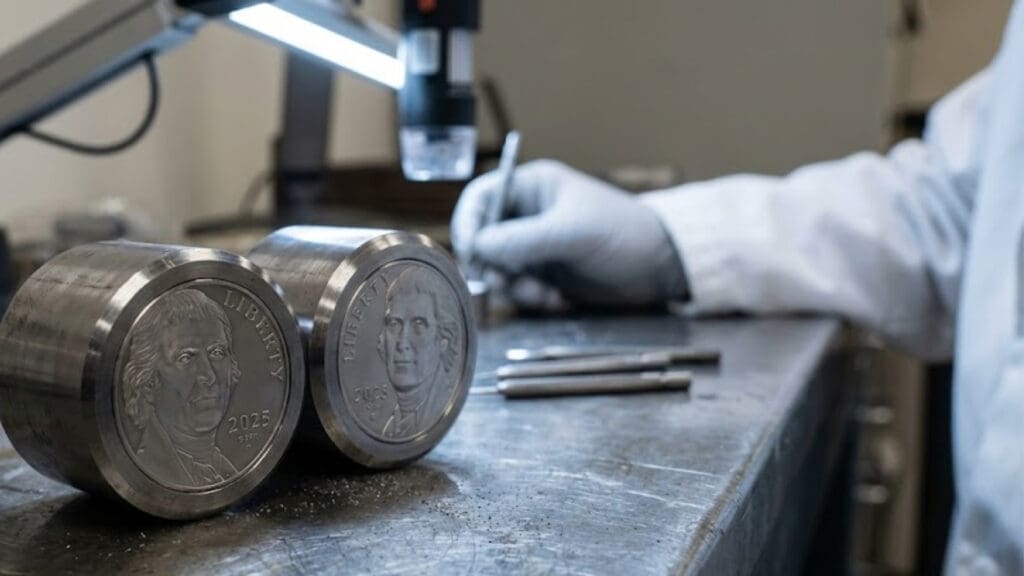
The dies contain the image. Designers build artwork that reflects history and identity. Engravers convert sketches into three dimensional sculpted models. Laser reduction mills cut the final design into hardened steel.
The result is two dies. One for the obverse. One for the reverse. The image is reversed inside the die so it will appear correctly when pressed into the metal. The dies are polished, checked under magnification, and tested for clarity.
If you enjoy the evolution of American coin design, study History of the American Gold Eagle Designs.
The Strike
This is the moment the blank becomes a coin. The blank slides into position. The upper die descends. The lower die holds steady. The press applies immense pressure. Metal flows into every line of the design. Relief forms. In a single moment, a plain circle transforms into a finished coin.
Proof coins receive multiple impressions for sharper detail. Bullion coins usually receive a single strike which still produces remarkable clarity thanks to modern equipment.
If you want to understand how design strength affects desirability, review Rare Collectible Coins.
Edges and Inspection
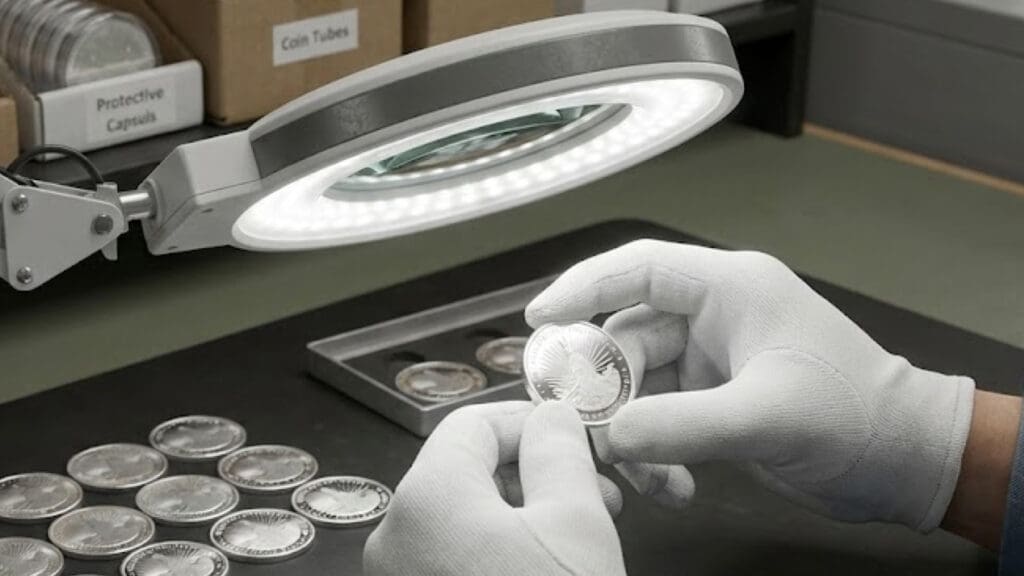
A struck coin enters finishing. Rimming machines round the edges and add reeding or smooth edges depending on the design. The coin then enters inspection. This is where small details matter. The mint looks for weak relief. Off center strikes. Die fatigue. Surface marks. Early discoloration.
Collectors often become skilled at spotting these details. If you want to refine this skill, explore the Coin Grading and Authentication Guide.
Final Packaging
Coins leave the inspection area and move into packaging. Most bullion enters tubes or mint sealed boxes. Specialty and proof coins enter capsules and presentation cases. Packaging protects relief, surfaces, and the finish that collectors value.
Security minded collectors may wish to revisit Gold Scam Prevention and Metals Security to strengthen their buying and storage practices.
Conclusion
Minting blends artistry and engineering into a single continuous process. The blank begins with no identity. The dies carry the story. The press unites them. The inspection floor protects the final result. Collectors hold the finished work. Understanding this chain gives every coin a richer sense of purpose.
You now know how mints strike coins, step by step. The next time you admire a bullion piece, you will recognize the craft inside every line and every surface.
How do mints strike coins
Mints place a blank between two engraved dies and press the design into the metal using precise controlled force.
Why do coins need multiple strikes
Proof coins receive multiple impressions so the metal fills the finest details which creates a deeper and sharper design.
What creates weak strikes
Worn dies, uneven pressure, or a blank that was not prepared correctly can all create a softer impression.
How do mints check quality
Technicians inspect each batch for strike clarity, centered alignment, surface condition, and edge accuracy.
Why is the blank so important
A clean even blank produces a cleaner final strike which makes every detail more accurate.
Leave a Reply