Your cart is currently empty!

Why Edges, Finishes, and Relief Matter in Modern Coin Production


Collectors spend a lot of time admiring the art on a coin. The design carries the story. The metal carries the value. But the edge, the finish, and the relief determine how that story lives on the surface of the coin. These three elements represent some of the most overlooked parts of modern minting. They may seem subtle at first glance. They become essential once you understand how much skill goes into shaping them.
If you need the earlier foundation about how a blank becomes a coin, read How Mints Strike Coins From Blank to Finished Bullion.
What a Coin Edge Reveals
A coin’s edge serves as its silent defender. The edge prevents clipping. It shapes the profile, guides the strike and can even contain messages or security markers. A clean edge is a sign of disciplined minting. A rough edge tells a different story.
There are several types collectors encounter. Reeded edges appear on many modern bullion pieces. They show uniform texture. Every groove must match. Smooth edges appear on commemoratives or larger medals. Lettered edges carry inscriptions that require precision cutting. Security edges use micro grooves, subtle ridges, or encoded textures. These appear on coins like the Silver Maple Leaf which uses advanced edge machining along with its radial line finish.
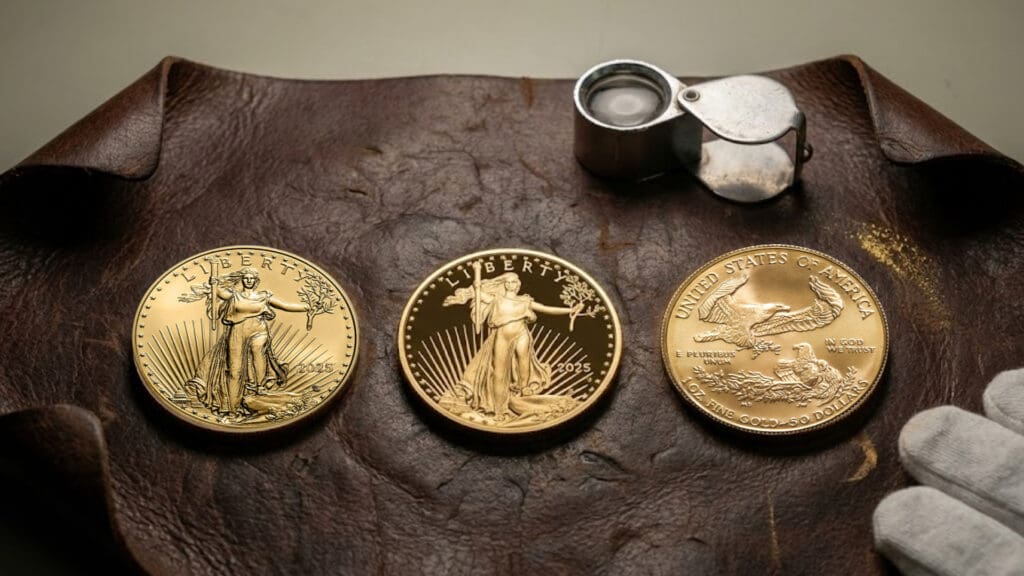
You can study these features up close on real pieces such as the American Gold Eagle Coin, a mint classic with reliable reeded edges.
How Finishes Create Personality
A finish does more than change the appearance of metal. It defines the character of the coin. Most collectors know the difference between Proof and Brilliant Uncirculated. The minting world holds more variety than that.
A Proof coin receives multiple strikes with polished dies. The raised design appears frosted. The fields shine like glass. A Reverse Proof flips this effect. A Burnished finish has a matte texture created through a pre strike polishing treatment. A Brilliant Uncirculated coin shows a balanced satin and shine look from a single strong strike.
These finishes transform the same metal into entirely different experiences. A Proof Silver American Eagle looks elegant and formal. A standard bullion strike looks direct and bold. A burnished finish feels understated and refined.
To understand why these finishes matter, look at a piece like the Platinum Philharmonic, which uses a highly consistent satin finish that reflects fine detail cleanly across the surface.
What Relief Tells You About a Coin
Relief is the height of the design above the coin’s surface. Relief shapes emotion. It creates depth. It gives metal a sense of movement. A shallow relief creates a calm, flat look. A higher relief creates dramatic shadows. The highest levels produce sculpture like forms.
Standard relief coins use moderate depth so the coin stacks easily. High relief coins use deeper engraving and require more force to strike. Ultra high relief pieces push the limits of the metal. The dies must be strong. The presses must deliver precise force. The blank must be annealed perfectly.
Collectors who love texture and dimensionality often pursue high relief coins. They catch light differently. They carry a different presence.
For an example of fine relief symmetry, study the American Gold Buffalo, known for its bold recessed fields and lifted features.
How Mints Shape These Features
Edges come from specialized rimming machines. These machines spin the blank and compress the perimeter. This sharpens the profile. Reeded edges require steel collars with grooves cut into their walls. The collar surrounds the blank during the strike. The grooves imprint the texture.
Finishes depend on the dies. Proof dies are polished by hand and machine. Frosting is applied with lasers or micro abrasive techniques. Burnished blanks travel through vibratory polishers that use ceramic media. Brilliant Uncirculated finishes depend on the energy of the strike and the condition of the die.
Relief depends on how deep the dies are engraved and how the metal flows under pressure. More depth requires more striking power. Some mints strike high relief coins multiple times. Others use hydraulic presses with extended dwell time so metal flows gently into every corner.
For broader understanding, consult the Coin Grading and Authentication Guide, especially the section on surface evaluation.

Conclusion
Edges define the boundary. Finishes shape the personality. Relief gives the artwork life. Together they transform a blank piece of metal into something with depth, identity, and history. The next time you admire a coin, look at its edge. Study the fields. Tilt the relief in the light. You will see the decisions of artists and engineers working in harmony, this is the difference between metal and meaning.
What does a coin’s edge reveal about its quality
A coin’s edge shows how well the strike was executed and whether the coin has been handled or altered. Reeded, lettered, or smooth edges all carry clues about the precision of the collar and the strength of the strike. Collectors often check the edge first because it holds signs of authenticity and workmanship that fields alone do not show.
Why are different finishes used on modern bullion coins
Finishes help communicate a coin’s intended purpose and level of craftsmanship. Brilliant uncirculated pieces show a satin glow created by standard striking. Proof coins feature mirrored fields and frosted raised elements for visual clarity. Burnished coins have a matte appearance created through early surface preparation. Each finish interacts with light differently and adds its own character to the design.
What does relief mean in coin production
Relief refers to how high or low the design rises from the coin’s surface. High relief coins have more sculptural depth while shallow relief pieces appear flatter. This affects how the artwork looks under light and how collectors experience the textures of the design. It also reflects the mint’s decisions about strike pressure and die preparation.
How does relief influence the appearance of a coin
Relief controls how shadows and highlights form across the surface. Higher relief creates strong contrast and a more dimensional look. Lower relief produces gentler transitions and a smoother profile. When lighting moves across the coin, the relief determines how features like faces, feathers, or lettering come to life.
Why do collectors study edges, finishes, and relief together
These three elements express the craftsmanship found in modern minting. The edge reveals structural precision. The finish shows surface preparation. The relief explains how well the design was transferred from die to metal. Together they create a complete picture of how thoughtfully the coin was made and how well it has been preserved.
Can finish or relief help identify authenticity
Yes. Authentic coins display consistent finishes and relief depths that match their mint specifications. Counterfeit pieces often show uneven frosting, incorrect mirror quality, or relief that does not match the official design. Studying these details helps collectors verify authenticity and avoid altered or imitation pieces.
Leave a Reply